
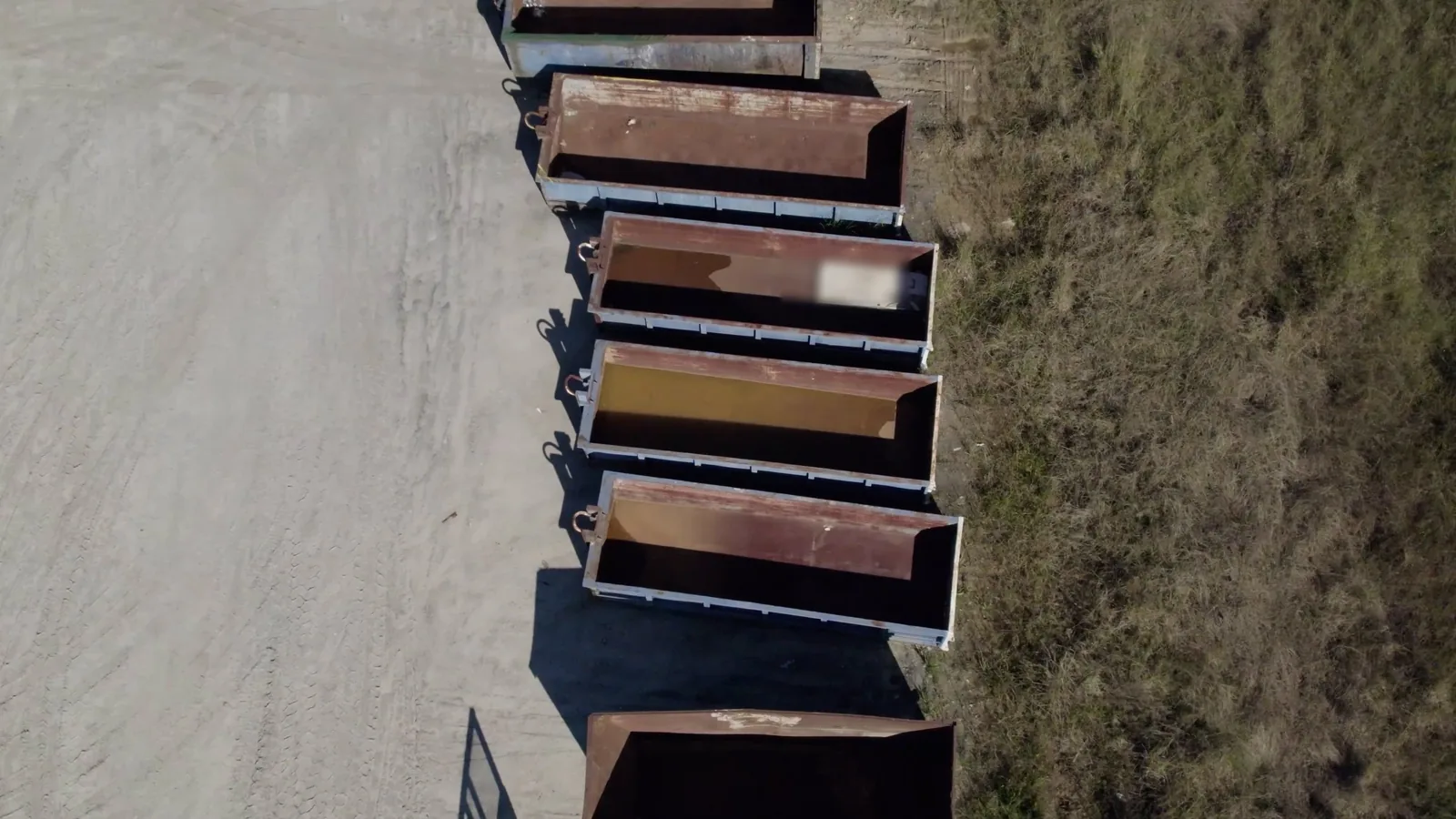
What Size Dumpster Do I Need?
Pick a dumpster by how much debris you have and how heavy it is. Small jobs fit a 10 or 15 yard can. Whole-home cleanouts and big remodels often call for a 30. Bulky, light loads, like new construction scraps or a house full of furniture, fill a 40.
Heavy debris changes the pick. In a big can, a load of concrete, dirt, brick or shingles hits road weight limits before the can is full. Dump 1 rents the two biggest sizes: 30 yard roll-off dumpsters and 40 yard cans. Each size below has its typical dimensions and the jobs it suits.
What do dumpster sizes mean?
The size is the volume of debris the can holds, measured in cubic yards. One cubic yard is a box 3 feet on each side. A 30 yard dumpster holds about 30 of those boxes of loose debris.
Most roll-offs are close to 8 feet wide. From a 10 to a 20, the can mostly gets longer. From a 20 to a 40, the footprint stays about the same and the walls get taller.
Exact sizes vary a little by maker. The figures below are typical numbers from manufacturer spec sheets and from city and county solid waste pages.
How big is each roll-off dumpster size?
The five common sizes line up like this. Heights are outside measurements, and the inside of the can is about a foot shallower.
| Size | Typical outside size | Jobs it often suits | Rented by Dump 1 |
|---|---|---|---|
| 10 yard | About 12 ft long, 8 ft wide, 3 to 4 ft tall | A small cleanout or a bathroom tear-out | No |
| 15 yard | About 16 ft long, 8 ft wide, 4 to 4.5 ft tall | A garage cleanout or a small remodel | No |
| 20 yard | About 22 ft long, just under 8 ft wide, 4.5 ft tall | Flooring or drywall from several rooms | No |
| 30 yard | About 22 ft long, just under 8 ft wide, 6 ft tall | Whole-home cleanouts and big remodels | Yes |
| 40 yard | About 22 ft long, just under 8 ft wide, 8 ft tall | New construction and bulky estate cleanouts | Yes |
The three bigger sizes run close to 23 feet end to end. Measure your driveway with that in mind. The truck also needs a straight way in and clear space overhead, away from power lines. Read how a roll-off drop and pickup work before you pick the spot.
Which jobs fit a 10, 15 or 20 yard dumpster?
A 10 yard can is the smallest of the five. It often suits a small cleanout or a bathroom tear-out. A 15 yard can runs about 4 feet longer and a bit taller. It can take a garage cleanout or a small kitchen remodel.
A 20 yard can has the same long footprint as the big sizes and stands about 4.5 feet tall. It takes flooring or drywall from several rooms, or the tear-out from a mid-size remodel.
Dump 1 rents 30 and 40 yard cans only. A job sized for a smaller can still fits in a 30, with room to spare. Just check the spot first, since a 30 needs close to 23 feet of length.
What jobs fit the 30 yard size?
A 30 yard dumpster suits a whole house or a big project. Many whole-home cleanouts fit in one, and so do garage and attic cleanouts. It takes the tear-out from a big kitchen or bathroom remodel. Contractors use it for debris on mid-size construction jobs.
A typical 30 is about 22 feet long, just under 8 feet wide and about 6 feet tall. Its lower walls make hand loading easier than with a 40. It can take a roof tear-off too, though shingles get heavy fast.
When does a 40 yard make more sense?
Step up to a 40 yard roll-off dumpster when the load is bulky and light. New construction scraps and packaging fill space fast. So does a house full of furniture in an estate cleanout. Commercial cleanouts and full-house guts are common 40 yard jobs too.
On typical spec sheets, a 40 has the same footprint as a 30 and stands about 2 feet taller. It fits in the same kind of space on a driveway or a jobsite. Tall walls make it harder to lift debris over the side. Many roll-off cans have a rear door, so you can walk bulky pieces in.
Why does weight matter as much as size?
A dumpster fills by weight as well as by space. A loaded roll-off truck has to stay within legal weight limits on public roads. In Texas, those limits are set by the number of axles on the truck.
Heavy debris hits that limit long before a big can looks full. EPA volume-to-weight tables put a cubic yard of dirt and sand at about 930 pounds. Roofing shingles come in near 730 pounds per cubic yard, and clean lumber near 170. So a yard of dirt weighs more than five times what a yard of lumber does.
City programs that rent roll-offs post the same kind of rule. One city says its cans cannot be filled to capacity with demolition material, concrete, rock and other heavy materials. It gives weight limits as the reason. A North Texas city caps dirt, rock, brick and dry concrete at half full in its 20 yard can.
For a heavy load, tell us what is going in before the drop. We will plan the load with you. A big roof tear-off may need a swap partway through. We empty the full can and bring it back.
The full can goes to the landfill, so paint and chemicals stay out. For the rest of the landfill rules, read what can go in a dumpster in Texas.
Which dumpster size should you ask for?
Pick the 30 for a cleanout or a remodel, or a load that mixes heavy and light debris. Pick the 40 when the load is bulky and light, like new construction or a house full of furniture. Call first when the load is mostly concrete, dirt, brick or shingles. Ask about a swap when one can will not hold the whole job.
To book, call (817) 888-5815 or send the quote form. Tell us the address, the drop day, the size and what is going in the can. You can get same-day delivery when you need it, or pick a scheduled drop day. A standard rental runs 7 days.
We deliver across Burleson, Fort Worth and the areas around them. City rules on who may place a roll-off vary across the area. Call with the address and we will tell you whether we can drop a can there.
Next, read about 30 yard dumpster rental. That page covers driveway fit and heavy loads in more detail.