
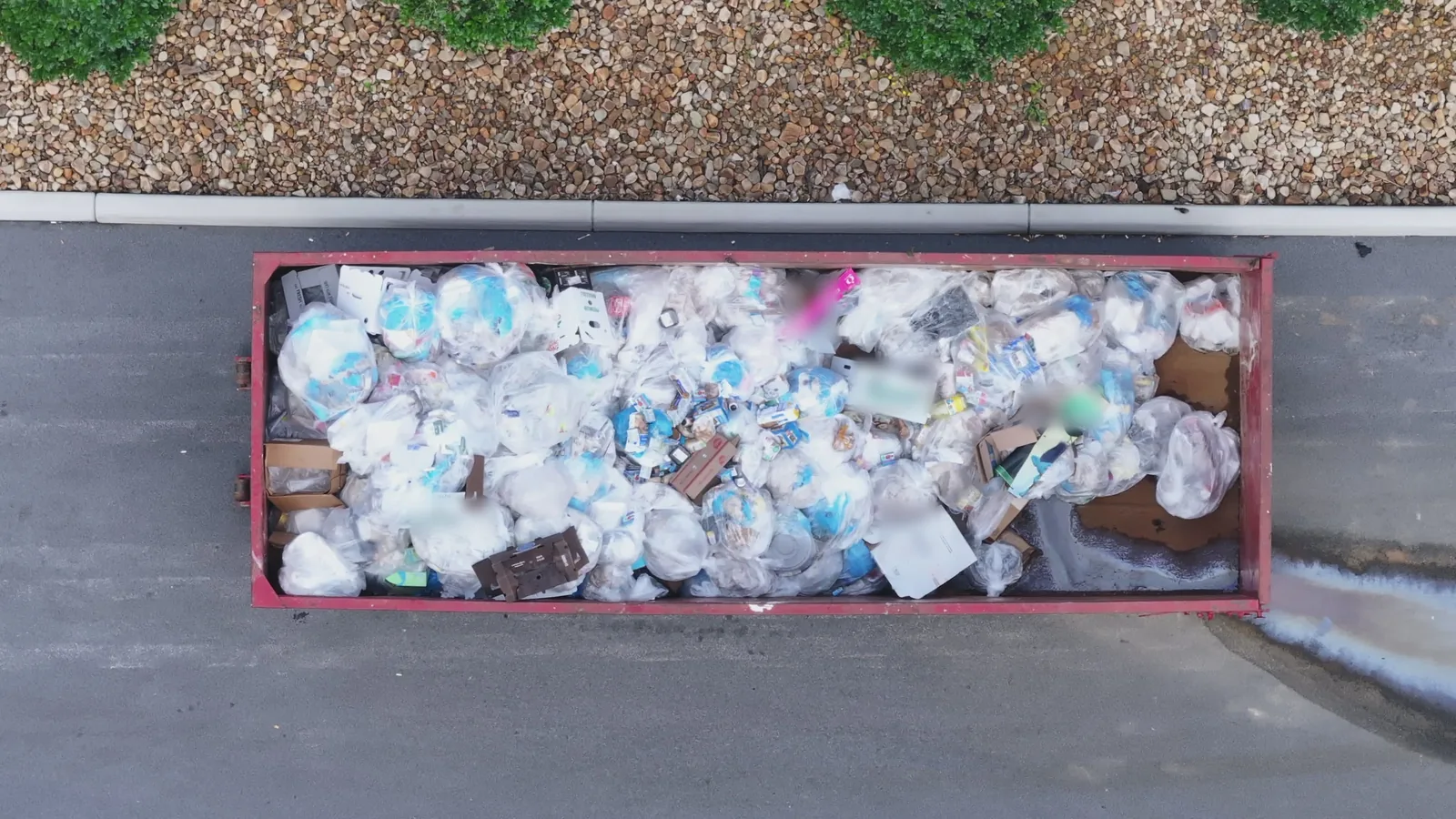
What Can You Put in a Dumpster in Texas?
Most debris from home cleanouts and remodels can go in a roll-off dumpster, and so can construction debris. Furniture, carpet, drywall, cabinets, lumber, brush and shingles all go in. Hazardous material stays out: no paint and no chemicals. That is our rule at Dump 1, because every full can gets emptied at the dump.
Texas landfill rules keep a few more items out. Rules from the Texas Commission on Environmental Quality (TCEQ) bar car batteries, used motor oil, oil filters and whole tires. Those same rules limit liquid waste and bar regulated hazardous waste at landfills. Refrigerators and air conditioners need their refrigerant recovered before disposal, under federal rules.
The table below sorts common items. Planning a cleanout or a remodel at home? Our residential dumpster rental page covers how the drop and the 7-day rental work.
Which items are a yes, a no or an ask first?
The last column gives the reason for each answer. Ask first means a quick call before it goes in the can.
| Item | Answer | Why |
|---|---|---|
| Furniture and household junk | Yes | Cleanout debris. |
| Cabinets, drywall, flooring and carpet | Yes | Remodel debris. |
| Lumber and fence boards | Yes | Building and fence debris. |
| Brush and tree limbs | Yes | Yard project debris. |
| Roofing shingles | Yes | Heavy, so tell us the roof size and layer count. |
| Concrete, brick, dirt and rock | Ask first | Weight sets the limit before space does. |
| Fridges and AC units | Ask first | Federal rules call for the refrigerant to be recovered. |
| TVs and computers | Ask first | Burleson’s events and Fort Worth’s drop-off stations take them from residents. |
| Paint and paint thinner | No | Our rule: no hazardous material. |
| Household and pool chemicals | No | Our rule: no hazardous material. |
| Propane tanks and gasoline | No | TCEQ lists these fuels as household hazardous waste. |
| Car batteries | No | Texas landfill rule, 30 TAC 330.15(e)(1). |
| Used motor oil and oil filters | No | Texas landfill rule, 330.15(e)(2) and (e)(3). |
| Whole tires | No | Texas landfill rule, 330.15(e)(4). |
| Bulk liquids | No | Texas landfill rule on liquid waste, 330.15(e)(6). |
| Asbestos | No | Only landfills approved for regulated asbestos may take it. |
This is a guide, not a complete legal list. TCEQ notes that a landfill may choose not to accept some wastes its permit allows. When an item is not on this list, ask before it goes in the can.
What can go in a roll-off dumpster?
A roll-off is built for bulky, dry debris. The garage is full, or the kitchen is coming out. Old furniture, boxes, cabinets, countertops, drywall and flooring all go in. So do brush and old fence boards from a yard project.
TCEQ’s landfill guide backs this up. It lists brush, construction waste, demolition waste and rubbish as allowed at every type of Texas landfill.
The roof is coming off Saturday? Shingles go in, but they are heavy. Tell us the roof size and the layer count, and we will suggest a can. We rent 30 and 40 yard roll-off dumpsters.
Concrete, brick, dirt and rock are ask-first items. Heavy debris fills a can by weight long before it fills by volume. Texas sets legal weight limits for trucks on its roads, so a heavy load needs a plan. For sizing help, read our guide to choosing a dumpster size.
Why do paint and chemicals stay out of our cans?
Our rule is no hazardous material, which means no paint and no chemicals. We haul every full can to the dump, and the whole load goes in at once. That is why hazardous items have to stay out from the start.
TCEQ’s household hazardous waste guide lists oil-based paint, pesticides, pool chlorine and fuels like propane. When those come from a home, TCEQ says they do not have to be handled as hazardous waste. Fort Worth and Burleson still point residents to collection sites for them. Our rule keeps them out of the can either way.
What do Texas landfill rules keep out?
TCEQ’s rules for landfills and other municipal solid waste sites sit in Chapter 330 of the Texas Administrative Code. Section 330.15(e) bars these wastes from disposal at any of those sites:
- Lead-acid batteries, such as car batteries.
- Used motor oil from do-it-yourself oil changes.
- Used oil filters from engines.
- Whole used or scrap tires, unless they are processed first.
- Liquid waste, with a few narrow exceptions.
- Regulated hazardous waste.
- PCB waste, unless the EPA and the site’s permit allow it.
- Radioactive materials, with narrow exceptions.
Appliances that hold refrigerant get their own line. The rule sends them through federal refrigerant rules. Under EPA rules, the last stop in the disposal chain must see that the refrigerant was recovered. That stop is often a scrap metal recycler or a landfill.
Asbestos falls under a separate rule, 30 TAC 330.171. Only a landfill approved for regulated asbestos may take it. It must arrive in sealed bags or containers, or wrapped in plastic at least six mil thick. The delivery is set up with the landfill ahead of time.
Where do Tarrant and Johnson County residents take household hazardous waste?
The City of Fort Worth runs the Environmental Collection Center, a drop-off site for household hazardous waste. It serves Fort Worth residents and residents of participating cities. The city’s page says it cannot accept household chemical waste from cities off that list.
Burleson is on the list, and Burleson residents need no voucher. Johnson County and Tarrant County are on it too, and both require a voucher first. Some other participating cities also ask for one, so check the list before you load the car.
Bring proof of residency, such as a driver’s license or a water bill. Burleson’s page asks for a city water or solid waste bill.
The center takes paint, automotive fluids, batteries, cleaners, cooking oil, light bulbs, and pool and garden chemicals. It does not take tires, appliances, electronics, building materials, asbestos, or propane and butane cylinders. The city also holds mobile collection events in Fort Worth and participating cities during the year.
Burleson holds its own collection events for residents inside city limits. Dates go up on the city’s household hazardous waste page. Those events take paint, chemicals, batteries and motor oil, plus up to four tires per household.
Fort Worth residents with a city solid waste account can also use the city’s drop-off stations. Those take up to four passenger tires per household every six months. They also take refrigerators and air conditioners, and the city says the Freon does not need to be removed.
For other towns, TCEQ posts a list of local household hazardous waste programs and collection events. Your city can also tell you where its residents take them.
Do the rules change for a jobsite or a business?
The landfill rules stay the same, and so does our rule. Drywall, lumber, roofing and demolition debris are what a construction dumpster is for. Jobsites still turn up leftover paint, solvents, fluorescent tubes and old batteries. Set those aside before the can arrives.
Business cleanouts need the same care. Chemicals from a business can fall under the state’s hazardous waste rules, unlike the same products from a home. Fort Worth’s collection center takes household waste only, not business waste. Our commercial dumpster rental page covers cleanouts and renovations at a business.
Not sure if an item can go in?
Call (817) 888-5815 before it goes in the can, and we will talk it through. We deliver 30 and 40 yard roll-off dumpsters to Burleson, Fort Worth and the areas around them. For a cleanout or remodel at home, see dumpster rental for home projects.